
Mind-Body Connection Sickness: Understanding How Emotions and Thoughts Create Physical Illness
Have you ever noticed your stomach churning before an important presentation? Or felt exhausted after days of worry, even without physical exertion? These aren’t coincidences. The mind-body connection sickness reveals how our thoughts and emotions directly shape our physical health. Ancient wisdom recognized what modern science now confirms: the psychological origins of illness run deeper than we realize. When we understand how emotions cause physical sickness, we unlock powerful pathways to healing.
This guide explores the hidden mechanisms linking your mental state to physical symptoms and offers practical wisdom for reclaiming your health from the inside out.
What Is Mind-Body Connection Sickness?
Mind-Body Connection Sickness describes physical ailments that originate in mental and emotional disturbances rather than external pathogens or injuries. Unlike conditions caused by viruses or accidents, these illnesses develop when persistent thoughts and feelings disrupt your body’s natural balance.
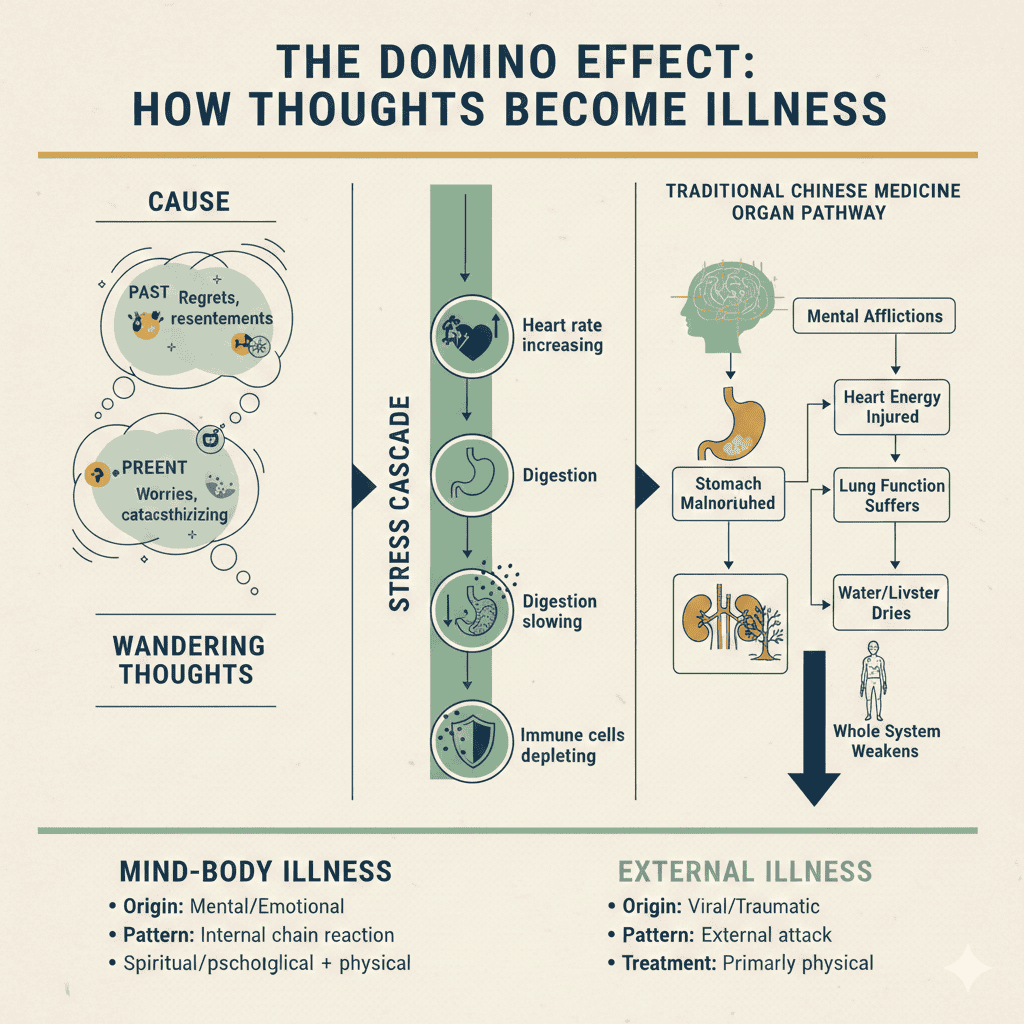
The psychological origins of illness begin with what ancient texts call “wandering thoughts”—the constant mental chatter about past regrets, present anxieties, and future worries.
These thoughts trigger stress responses that cascade through your entire system.
Therefore, your heart rate increases, your digestion weakens, and your immune function declines. Over time, these changes manifest as tangible symptoms: headaches, digestive issues, chronic fatigue, or worse.
Traditional medicine recognized that Mind-Body Connection Sickness follows predictable patterns. First, mental afflictions injure the heart’s energy. Then, the weakened heart fails to nourish the stomach, causing appetite loss. As a result, lung function suffers, leading to respiratory problems. This chain reaction eventually affects all five major organ systems unless addressed at its source.
How Emotions Cause Physical Sickness
Understanding how emotions cause physical sickness requires examining the seven core feelings that ancient healers identified: joy, anger, sadness, happiness, worry, fear, and surprise. When these emotions become excessive or unbalanced, they create what traditional medicine calls “internal injury.”
Stress, Fear, and Hormonal Imbalance
Chronic worry and fear activate your sympathetic nervous system constantly. Your body floods with cortisol and adrenaline, preparing for threats that never arrive. This hormonal cascade raises blood pressure, suppresses digestion, and depletes vital resources. Consequently, you experience symptoms like rapid heartbeat, shallow breathing, and weakened immunity—all signs of how emotions cause physical sickness in real time.
Emotional Overload and Organ Weakness
Each emotion affects specific organ systems differently. Anger overheats the liver. Excessive pensiveness damages the spleen. Unresolved grief weakens the lungs. When you carry these emotional burdens for months or years, the corresponding organs develop deficiencies. This explains why chronically anxious people often suffer digestive problems, or why those who suppress anger experience liver-related issues.
Case Examples from Ancient Teachings
A man with severe heart disease who met a monk versed in healing. The monk explained that his illness stemmed from three types of errant thoughts: dwelling on past grievances, obsessing over present decisions, and fantasizing about future achievements. By recognizing these thought patterns as “illusory mind” and releasing them, the man’s heart condition disappeared within a month of meditation practice.
The Psychological Origins of Illness
The psychological origins of illness trace back to a simple progression: thoughts generate emotions, emotions alter physiology, and chronic physiological changes become disease. This isn’t mystical—it’s increasingly supported by research on psychoneuroimmunology and the mind-body relationship in mental health.
Root Cause: Thoughts → Emotions → Body
Every illness begins as an invisible seed. Before pain manifests in your body, the psychological origins of illness take root in your consciousness. You ruminate on problems, replay conversations, or worry about outcomes beyond your control. These mental habits activate stress pathways that redirect blood flow, alter hormone production, and trigger inflammatory responses.
Errant Thoughts and Chronic Stress Pathways
Ancient philosophers categorized problematic thinking into three temporal dimensions. Past-focused thoughts involve replaying old arguments, missed opportunities, or nostalgic memories. Present-focused errant thinking means obsessing over every decision, unable to act decisively. Future-focused thoughts include anxiety about hypothetical scenarios and attachment to outcomes you cannot guarantee.
Each category keeps your nervous system in perpetual alert mode. Therefore, your body never enters the parasympathetic “rest and digest” state necessary for healing and regeneration.
The Illusory Nature of Mental Affliction
The good news? Once you recognize thought patterns as temporary mental events rather than absolute truths, they lose their power. As the ancient saying goes: “Don’t worry about the occurrence of thoughts, only beware of being slow to notice.” The arising of thought itself is the sickness; not continuing to follow those thoughts is the medicine.
Psychological Origins of Illness and Spiritual Healing
While modern medicine excels at treating physical symptoms, the psychological origins of illness and spiritual healing address root causes that pills cannot reach. When sickness stems from damaged vitality and spirit rather than external pathogens, you need different interventions.
Beyond Physical Treatment
Herbs, medications, acupuncture, and surgery effectively treat externally caused conditions. However, when Mind-Body Connection Sickness arises from internal energetic disruption, these approaches only manage symptoms. True healing requires “inner gazing and quiet nurturing”—contemplative practices that restore mental equilibrium.
The Practice of Inner Observation
Spiritual healing traditions teach a radical technique: observe yourself as if caring for a sick friend. When illness strikes, most people panic or ignore symptoms until they worsen. Instead, practice looking inward with compassionate awareness. As you gaze internally, you eventually recognize that the “sick self” is a mental construct. When you see clearly that mind and body are not solid, fixed entities, the question arises: who exactly is suffering?
This isn’t denial of symptoms. Rather, it’s understanding how emotions cause physical sickness through identification and attachment. By developing mindfulness practices that strengthen memory and awareness, you create space between stimulus and response.
The Role of Meditation in Healing
Regular meditation practice—particularly what ancient texts call “quiet sitting”—allows your system to reset. During meditation, you stop feeding errant thoughts with attention. Your stress hormones normalize. Blood flow redistributes to healing functions. This is why the psychological origins of illness and spiritual healing are inseparable: the same practices that cultivate spiritual insight also restore physiological balance.
To deepen your understanding of these practices, explore what meditation actually is and how it works as a foundation for healing.
Ancient Wisdom on Mind-Body Connection Sickness
Traditional healing systems developed sophisticated frameworks for understanding Mind-Body Connection Sickness thousands of years before modern medicine existed. Their insights remain remarkably relevant.
The Five Organs and Emotional Imbalance
Ancient medicine mapped specific emotions to organ systems: anger to the liver, joy to the heart, worry to the spleen, grief to the lungs, and fear to the kidneys. This wasn’t superstition—practitioners observed how emotional states preceded organ dysfunction. They noticed that chronically fearful people developed kidney problems, while those who couldn’t release anger suffered liver disease.
Errant Thoughts and Energetic Disruption
The concept of “wandering thoughts” describes how unfocused mental activity scatters your vital energy. Instead of concentrating your resources on healing and maintaining balance, your system constantly reacts to internal narratives. This energetic fragmentation prevents the smooth flow of qi (life force) through meridian channels, creating blockages that manifest as pain, inflammation, or organ weakness.
Water-Fire Imbalance in Traditional Teachings
One particularly insightful framework describes illness as failure of “water and fire to mix.” Water energy—associated with coolness, stillness, and the lower body—must rise to temper the heart’s fire. Meanwhile, heart fire—representing warmth, activity, and consciousness—must descend to activate the water energy.
Excessive lust, whether acted upon or merely fantasized, depletes brain vitality and prevents water from rising. Obsessive intellectual work or professional overexertion causes heart fire to flare upward uncontrollably. When these energies fail to circulate and balance each other, serious illness develops. This ancient model parallels modern understanding of autonomic nervous system dysregulation.
How to Heal Mind-Body Connection Sickness
Healing Mind-Body Connection Sickness requires addressing both symptoms and root causes through integrated approaches.
Emotional Regulation Techniques
Start by identifying your dominant errant thought patterns. Do you constantly replay past events? Obsess over current situations? Worry about future outcomes? Simply naming these patterns begins to dissolve their power.
Practice the ancient technique: when thoughts arise, notice them immediately without judgment or engagement. Don’t try to suppress thoughts—that only strengthens them. Instead, observe them like clouds passing across the sky. As you develop this skill, the gap between thought and emotional reaction widens, preventing the cascade that leads to physical symptoms.
Spiritual Healing and Quiet Sitting
Set aside time daily for “quiet sitting”—sitting in a peaceful space with minimal stimulation, allowing your mind to settle naturally. Don’t force concentration or fight thoughts. Simply sit and observe whatever arises. Over weeks and months, this practice profoundly shifts how emotions cause physical sickness in your system.
The man with heart disease in the ancient text recovered by staying alone in one room and “emptying his mind of all objects” for over a month. While such intensive retreat isn’t realistic for most people today, even 15-20 minutes of daily quiet sitting yields significant benefits. These practices work synergistically with understanding how vibration and energy influence health.
Balancing Water and Fire Energies
To facilitate water-fire balance, reduce activities that scatter your vital energy. This includes moderating sexual activity (physical and mental), avoiding overwork, and limiting obsessive intellectual pursuits. These aren’t moral judgments—they’re pragmatic recommendations for conserving and directing your energy toward healing.
Simultaneously, cultivate practices that promote energetic circulation: gentle movement like tai chi or qigong, adequate sleep, time in nature, and nourishing relationships. These activities help vital energy flow smoothly through your system.
When to Seek Medical Help
While psychological origins of illness and spiritual healing are powerful, don’t ignore serious symptoms or reject conventional medicine. The ancient texts themselves acknowledged that different types of illness require different interventions. External injuries and acute conditions absolutely need medical treatment.
Use both approaches intelligently. Address physical symptoms with appropriate medical care while simultaneously working on the mental-emotional roots of chronic conditions. This integrated approach offers the best outcomes for Mind-Body Connection Sickness.
Conclusion
Mind-Body Connection Sickness reveals a profound truth: your health is inseparable from your mental and emotional state. When you recognize how emotions cause physical sickness through the cascade of thoughts → feelings → physiological changes, you gain power to intervene at the source. Ancient wisdom and modern research converge on this point—lasting healing requires addressing both body and mind.
The journey begins with simple awareness: noticing your thought patterns, observing emotional reactions, and understanding how these internal states manifest as physical symptoms. As you develop this awareness through meditation and self-observation, you’ll find that many ailments dissolve naturally when their root causes are addressed. Your body possesses remarkable self-healing capacity—you simply need to create the internal conditions that allow it to function optimally.
FAQ Section
What is Mind-Body Connection Sickness?
Mind-Body Connection Sickness refers to physical ailments that originate from mental and emotional disturbances rather than external causes like pathogens or injuries. These conditions develop when persistent negative thoughts and unbalanced emotions disrupt the body’s natural physiological balance, leading to tangible symptoms.
How do emotions cause physical sickness?
Emotions trigger hormonal and nervous system responses throughout your body. Chronic stress, fear, or anger activates your sympathetic nervous system, flooding your bloodstream with stress hormones like cortisol. Over time, this disrupts digestion, weakens immunity, and creates inflammation—manifesting as physical illness.
Can psychological origins of illness be reversed?
Yes, when you address the mental and emotional root causes through practices like meditation, emotional regulation, and lifestyle changes, many chronic conditions improve significantly. The body has remarkable healing capacity once the internal conditions that created the illness are resolved.
What is the role of spiritual healing in emotional illness?
Spiritual healing addresses the vitality and consciousness aspects of illness that conventional medicine cannot reach. Practices like meditation, inner observation, and quiet sitting help reset nervous system function, reduce stress hormones, and restore the body’s natural balance, facilitating healing from within.
How can I control wandering thoughts that cause sickness?
Rather than trying to control or suppress thoughts, practice noticing them without engagement. When thoughts arise, observe them like clouds passing without attaching to their content or following their narrative. This awareness breaks the thought-emotion-illness cascade.
What symptoms indicate emotional stress affecting the body?
Common signs include digestive problems, chronic fatigue, headaches, muscle tension, rapid heartbeat, shallow breathing, weakened immunity, sleep disturbances, and unexplained pain. These symptoms often appear after periods of prolonged stress, worry, or emotional turmoil.
Does traditional medicine support the mind-body connection?
Yes, traditional healing systems from various cultures recognized mind-body connections for millennia. Modern medicine increasingly acknowledges this through fields like psychoneuroimmunology, which studies how psychological factors influence immune function and overall health.