
Discover the Subtle Joy of Being Present: A Guide to Effortless Mindfulness
Have you ever noticed how your mind constantly searches for the next thing—scrolling through thoughts, planning ahead, replaying the past? Many meditation practitioners struggle with distraction and impatience during their practice. Yet hidden within the present moment lies something extraordinary: a refined, subtle joy that most people never discover. This gentle pleasure isn’t dramatic or overwhelming. It’s the quiet contentment of simply being here, now.
Understanding the subtle joy of being present transforms meditation from a discipline into something naturally magnetic. When you learn how to stay present in meditation through contemplation of feeling meditation, you unlock a wholesome happiness that makes mindfulness feel effortless rather than forced.
Why the Mind Misses the Subtle Joy of Being Present
Your mind overlooks this gentle pleasure for two main reasons. First, distraction pulls your attention away constantly. The mind habits toward entertainment and stimulation, always seeking something more interesting than this moment. This restless tendency obscures the refined feelings available right now.
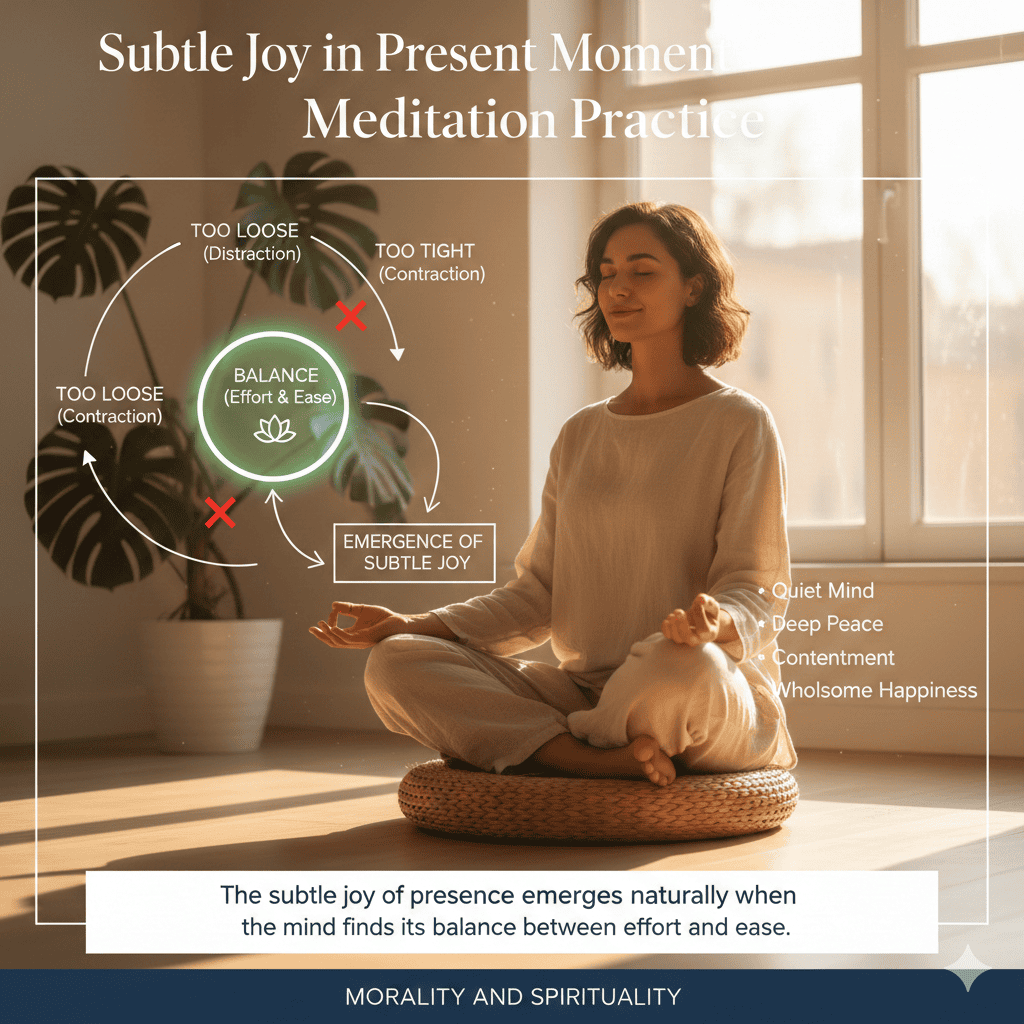
Second, excessive effort creates its own problem. When you push too hard in practice, mental tension blocks the very joy you’re seeking. The subtle joy of being present requires balance—not too loose (leading to distraction) nor too tight (creating contraction).
Think of tuning a musical instrument. Strings too slack produce dull sounds. Strings too taut create harsh tones. But properly balanced strings sing with clear, melodious music. Your mind works the same way. Finding this sweet spot between effort and ease allows subtle joy to arise naturally.
How to Stay Present in Meditation Without Strain
The key to successful practice lies in recognizing when you’ve hit that balance point. The presence or absence of subtle joy gives you immediate feedback about your practice quality.
When subtle joy appears, you know your mind has found equilibrium. When it disappears, you’ve either slackened into distraction or tightened into tension. This makes the feeling itself a valuable teacher, guiding your adjustments moment by moment.
Start by simply noticing what’s here right now—breath sensations, body awareness, sounds around you. Don’t force anything. Instead, relax into receptive awareness. Allow your attention to settle like dust gradually falling in still water.
As your mind stabilizes, watch for that quiet contentment. It feels different from excitement or intense pleasure. More like satisfaction, peace, or gentle warmth. Once recognized, this feeling becomes accessible anywhere—not just during formal meditation.
Learning how to stay present in meditation means cultivating this refined awareness consistently until it becomes your default mode rather than a special achievement.
Understanding Contemplation of Feeling Meditation
Contemplation of feeling meditation involves observing the emotional tone that colors every experience. Buddhist psychology identifies three basic types: pleasant, unpleasant, and neutral feelings. These aren’t emotions like anger or joy—they’re the fundamental pleasantness or unpleasantness underlying all experiences.
Most people never notice these subtle tones. We react automatically to strong feelings but miss the quiet ones. Contemplation of feeling meditation trains you to recognize this affective dimension of experience with increasing precision.
The practice reveals something remarkable: keeping your body still often produces uncomfortable sensations (stiffness, aches, restlessness). However, keeping your mind still produces pleasant feelings—that subtle joy we’ve been discussing. This contrast illuminates an important truth about happiness.
How Subtle Joy Arises During Mindful Awareness
The subtle joy of being present emerges when your mind rests in wholesome states. It’s not something you create through effort. Rather, it arises naturally when conditions align properly—when mindfulness stabilizes attention in the here and now.
Consider the difference between bodily and mental stillness. Sitting motionless for extended periods challenges the body. Physical discomfort naturally arises. Yet this very stillness of body supports mental settling.
As your mind grows calm and concentrated, pleasant feelings emerge from that inner quietude.
This joy doesn’t depend on external circumstances. It originates within consciousness itself. A concentrated, wholesome mind naturally inclines toward contentment. You’re tapping into an internal resource that’s always available, regardless of what’s happening around you.
The practice teaches you to distinguish between sensual pleasures (which depend on external stimuli and conditions) and this refined mental happiness (which arises from inner cultivation). Understanding our comprehensive guide on meditation practice helps establish this foundation.
Bringing the Subtle Joy of Being Present into Daily Life
Once you’ve recognized this feeling during meditation, you can access it anywhere. The most mundane activities become opportunities for presence and its accompanying joy.
Washing dishes? Feel the warm water, notice soap bubbles forming, observe hands moving through familiar motions. When awareness anchors fully in these simple sensations, subtle joy arises.
Waiting in line at the store? Instead of checking your phone or rehearsing mental to-do lists, come back to present moment awareness. Notice breathing. Feel your feet on the ground. Watch thoughts passing without following them.
Stuck in traffic? Rather than fuming about delays, use the time for contemplation. Observe the tension in your shoulders. Soften it consciously. Return attention to the here and now. Let subtle joy emerge from presence itself.
These ordinary moments offer countless opportunities. Every boring chore, every tedious wait, every repetitive task can transform from unpleasant drudgery into occasions for experiencing wholesome contentment. The situation doesn’t change—your relationship to it does.
Cultivating this subtle pleasure offers practical benefits beyond just feeling better. It directly counters the mind’s tendency toward distraction. Remember, distraction happens because the mind seeks entertainment and pleasure elsewhere. When you’ve connected with refined joy here and now, the mind naturally stays present rather than wandering off searching for something better.
Using Contemplation of Feeling Meditation to Deepen Awareness
Contemplation of feeling meditation does more than reveal subtle joy. It develops emotional intelligence and self-regulation. By observing feelings as they arise—pleasant, unpleasant, or neutral—you gain space between stimulus and response.
This practice helps you notice when stronger feelings arise. Established on the baseline of subtle present-moment joy, you quickly detect when anger, anxiety, or craving appears. This early detection allows skillful response rather than automatic reaction.
The practice also reveals how feelings drive behavior. Most actions stem from pursuing pleasant feelings or avoiding unpleasant ones. By observing this process clearly, you gain freedom from unconscious reactivity. Research on mindfulness and memory demonstrates how present-moment awareness affects cognitive function and emotional regulation.
Additionally, contemplation of feeling meditation teaches you to stabilize pleasant states. When subtle joy arises, you learn to sustain it through continued mindfulness. This reinforces wholesome mental habits while weakening patterns of distraction and craving.
The Path to Mental Happiness and Inner Freedom
Here’s a profound insight: happiness originates in the mind, not the body. Seeking pleasure through sensory experiences is an indirect route to contentment. You depend on external conditions—good food, pleasant sights, comfortable temperatures—that constantly change and disappoint.
Cultivating the subtle joy of being present offers a more direct path. You’re developing happiness from internal resources rather than external circumstances. This approach succeeds more reliably because it works with the mind’s natural tendency toward joy when established in wholesome states.
Moreover, sensual pleasure keeps you bound in cycles of craving and dissatisfaction. You continuously need more—more stimulation, more novelty, more intensity. This path leads nowhere but continued seeking.
Mental happiness developed through meditation leads toward liberation. As you become less dependent on external conditions for contentment, you gain genuine freedom. You discover sufficiency in what’s present right now. This aligns with understanding how to control your mind through ethical practice and mental cultivation.
Studies continue validating these ancient insights, showing meditation’s neurological benefits including enhanced emotional regulation and sustained attention.
Practical Tips for How to Stay Present in Meditation Every Day
Ready to experience this for yourself? Here are concrete steps:
Five to ten minutes daily builds sustainable habits. Quality matters more than duration.
Notice when effort feels forced versus when awareness flows naturally. Adjust until subtle contentment emerges.
Choose one routine task each day for full presence—brushing teeth, drinking coffee, walking to your car.
Pleasant feelings indicate good balance. Tension or drowsiness signal adjustment needs.
Subtle joy takes time to recognize. Your mind needs training to notice refined feelings it previously ignored.
Daily engagement, even briefly, transforms habits more effectively than occasional long sessions.
Learning how to stay present in meditation isn’t about perfection. It’s about repeatedly returning to now, gradually strengthening mindfulness until present-moment awareness becomes your natural state.
Conclusion
The subtle joy of being present represents one of meditation’s most valuable discoveries. This refined pleasure, easily overlooked amid daily distractions, offers both immediate reward and a path toward deeper freedom. As you develop skill in how to stay present in meditation through contemplation of feeling meditation, you’ll find that awareness itself becomes increasingly satisfying.
Rather than constantly seeking entertainment and stimulation elsewhere, you discover sufficiency here and now. This shift doesn’t require dramatic life changes—just consistent attention to what’s already present. Start today by bringing awareness to one ordinary moment. Notice what’s here. Allow subtle joy to emerge from simple presence. Your mind will thank you.
FAQ On The subtle Joy of Being Present
How can I recognize the subtle joy of being present during daily activities?
You can recognize the subtle joy of being present by noticing small, pleasant sensations that arise when your attention rests fully in the moment. This awareness becomes clearer when your mind is neither tense nor distracted.
What helps me learn how to stay present in meditation when my mind keeps wandering?
You can learn how to stay present in meditation by gently returning your attention to a single anchor like the breath while reducing unnecessary effort. This balance allows awareness to stabilize and makes the subtle joy of being present easier to notice.
How does contemplation of feeling meditation support emotional balance?
Contemplation of feeling meditation supports emotional balance by helping you observe pleasant, unpleasant, and neutral feelings without reacting. This practice builds clarity and creates space for the subtle joy of being present to arise naturally.
What is the relationship between how to stay present in meditation and experiencing subtle joy?
The relationship is that learning how to stay present in meditation creates the mental stillness needed for refined joy to emerge. When distraction fades, the subtle joy of being present appears more consistently and becomes easier to maintain.