
How to Remember Your Dreams Better: Symbols, Meanings & Lucid Techniques
Do you wake up with fragments of vivid dreams slipping away like sand through your fingers? Learning how to remember your dreams better unlocks a powerful dimension of consciousness that exists within you every night. Your dreams aren’t random mental noise—they’re doorways to understanding yourself more deeply.
In this guide, you’ll discover practical techniques for dream recall, learn to decode dream symbols and meanings that appear in your sleep, and explore lucid dreaming techniques that can transform your nighttime adventures into conscious experiences.
Why Dreams Matter: Your Most Sensitive State
The dream state represents your most sensitive condition of consciousness. You practice this state every time you sleep, making it constantly accessible. Understanding how to remember your dreams better begins with recognizing their profound importance.
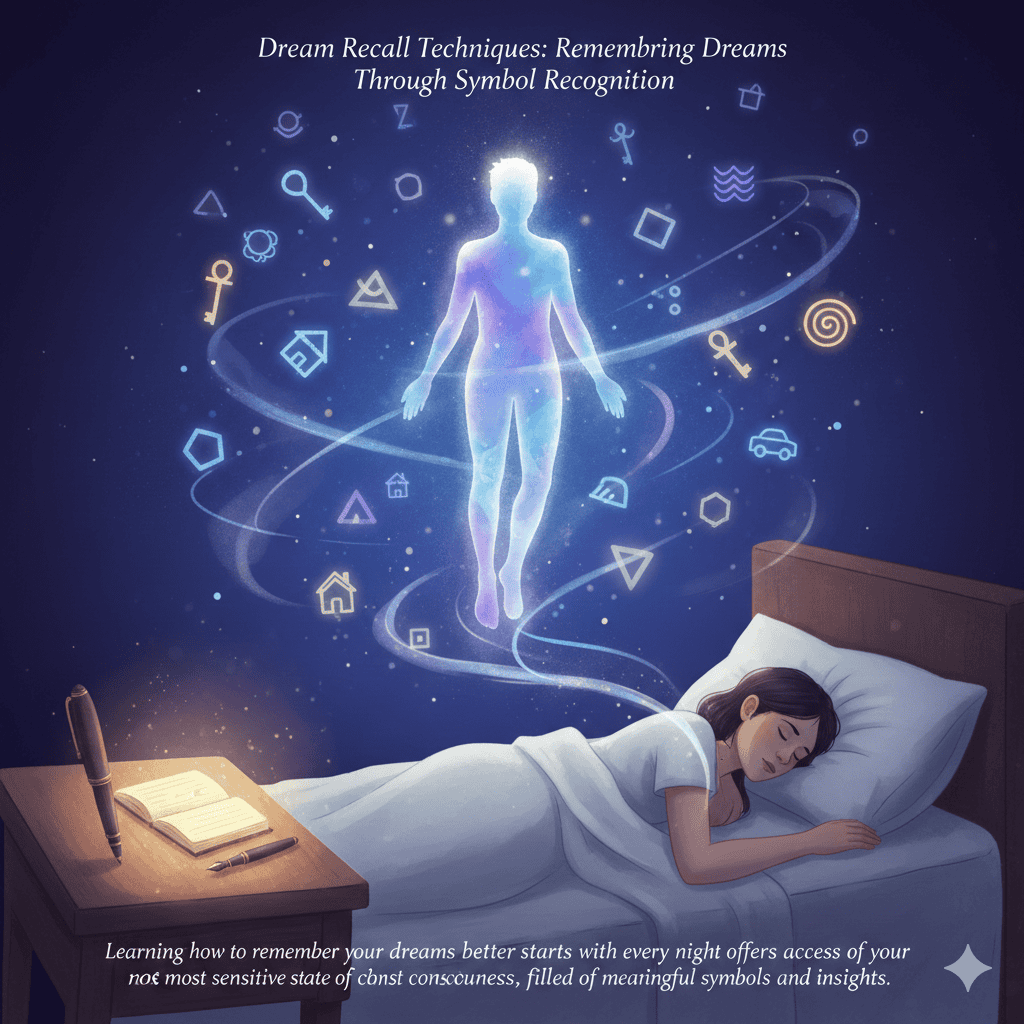
Your psychic unfoldment can start with something as simple as keeping a dream journal. Dreams lie suspended between your subconscious mind (the physical body) and conscious awareness, generating understanding as they rise into perception.
Since understanding and knowledge are keys to personal power, dreams offer you invaluable insights. This connection between consciousness and different states of awareness reveals why dream work proves so transformative.
A Simple Exercise to Remember Dreams
Here’s a practical technique for dream recall. Select specific information you want to know—perhaps an event before it happens or the outcome of particular circumstances. Express your desire for this information, repeating it three times.
Meditate on the circumstances, giving yourself instructions three times that immediately upon receiving information in the dream state, you’ll awaken and record it in your journal. Then proceed into sleep with this intention set.
This method works because you’re programming your mind with clear instructions, creating a bridge between unconscious and conscious awareness.
Understanding Dream Symbols and Meanings
The dream state typically begins with groupings of many symbols. Some are personal to you, while others are universal—the ankh, the serpent, geometric forms, pyramidal structures, and the cross. These universal symbols often carry consistent meanings across cultures.
Common Universal Symbols
Water: Often symbolizes life itself, as in “the waters of life.” A great body of water might indicate you’ll meet many individuals, while a small body suggests personal circumstances immediately relevant to you.
Vehicles: People frequently dream about automobiles, which symbolize yourself and your conditioning. If the vehicle appears in disrepair, this may reflect your personality’s current state. The vehicle’s color provides psychological clues—red may indicate hidden anger, while blue suggests the need for healing.
Houses: Housing structures typically represent the self in dreams. Different rooms or conditions of the house reflect various aspects of your personality or life circumstances.
Learning Situations: These can mean you have information to give or receive, either for your growth or another’s development.
Understanding dream symbols and meanings this way helps you decode the messages your subconscious sends nightly. The power of thought and consciousness manifests symbolically in dreams before appearing in waking life.
The Truth About Nightmares
Dreams of a displeasing nature—nightmares—are actually positive and don’t necessarily carry negative impact. They represent a cleansing of your subconscious mind. You tend to remember most graphically the things you fear, but this cleansing prepares you for more positive information flows from conscious planes and unconscious dream activity.
Each aspect in your dream represents some element of yourself or how you’re interacting with others, but it’s always reflective of you. Therefore, examine each object or symbol carefully. Meditate upon each symbol, cracking it like an egg to discover its contents.
Moving Beyond Symbols to Literal Dreams
After expressing through symbols, the dream state enters areas of greater clarity where events take on more literal appearance. These events are quite literal because you’ve achieved attunement with astral plane levels, which are as real as the physical plane.
Often colors appear more vivid in these dreams than their physical counterparts. You may retain memory of astral travels or encounters with individuals from past cultures—these are often guides and teachers you contact on superconscious levels.
Diet’s Surprising Effect on Dream Recall
How to remember your dreams better involves unexpected factors like diet. Altering your diet to consist largely of fresh fruits promotes better dream states. Fasting on fruit juices for twenty-four hours significantly increases dream activity and recall.
Orange juice about one hour before sleep serves as a marvelous stimulant for dreams because it’s rich in natural sugar. This mildly stimulates muscular tissues while allowing neurological tissues—the major seats where dreams are stored—to rest.
Here’s the mechanism: With neurological tissues at rest and muscular tissues slightly stimulated, dream material releases and amplifies through neural pathways. You wake with clearer memory because neurological tissues aren’t exhausted.
Conversely, eating grains turns off the dream state by occupying the digestive system differently. Diet can definitively influence your dream experiences.
The Dream Journal: Your Essential Tool
Upon awakening, immediately write images in a dream book and meditate upon them. Don’t analyze them—meditate on them. This distinction matters because analysis engages the left brain, which can become obnoxious and try analyzing everything into exhaustion.
Eventually the analytical mind will exhaust itself and turn everything over to the right brain, saying “Here, you work on this.” Then information flows more naturally.
Even if your dream’s meaning isn’t immediately apparent, keep a record. Either meditate until symbols become clear or set it aside for later. Always preserve dreams as memories, placing them on a mental shelf until they become appropriate. Often symbols crack open just before you need the information—like eggs that sometimes need incubation.
This practice of controlling your mind through observation rather than force proves essential for dream work.
When You Can’t Remember: Follow the Feelings
If you can’t remember dream events, follow the feelings instead. Write feelings down—they’re like fine threads pulling up the whole fish, the evening’s catch. It’s like casting your conscious mind as a net into the subconscious, seeing what you can haul up. Feelings are the threads hauling in the whole load.
This technique for how to remember your dreams better works because emotions attach to dream content even when visual details fade. The feeling tone remains accessible, providing your entry point back into the complete dream experience.
Dreams Are Neutral: You Choose the Charge
All things suppressed are stored in your subconscious mind. Dreams are inherently neutral—your conscious mind chooses to place emotional charges on them. When you realize dreams are simply an emptying of the subconscious, you understand that although a particular dream could have taken a more pleasant form, it’s only purging from subconscious to conscious levels, letting go of images.
This perspective helps you become clearer with the dream process rather than rejecting imagery and re-suppressing it. The very value lies in having dreamed it—you can now release it.
Most dreams about death represent transitory life events. Death accompanies you daily, but it doesn’t truly exist—only transitions from one consciousness state to another. Dreams about physical passing typically mean you’ve completed a work phase, not that your “ticker will be giving out imminently.”
The Dream State as a Dimension
The dream state is literally a dimension, not merely random subconscious wanderings. It accesses a broader degree of recall, mind, and memory existing independently of your physical body. This information cycles through your body to become focused in the present—a “dimension of mind.”
Your higher self or super consciousness resembles a constantly turning wheel generating causal energy. It flows into the subconscious mind through subtle anatomies, cycles through the physical body as life force, then approaches conscious realms. It breaks up anything unspiritualized or blocked in your physical body, dragging it into the dream state.
Your dreams become a series of symbols representing activated energy, allowing you to retain information consciously from the subconscious. By analyzing dreams or receiving images through hypnosis or meditation, you open to this continuous process.
Scientific research on dream consciousness and memory supports these traditional insights, showing measurable changes in brain activity and memory consolidation during dream states.
Lucid Dreaming Techniques: Conscious Awareness While Asleep
As you progress in understanding dream symbols and meanings, you naturally develop greater awareness within dreams themselves. This leads to lucid dreaming—knowing you’re dreaming while the dream unfolds.
Lucid dreaming techniques begin with reality testing during waking hours. Throughout your day, regularly ask yourself: “Am I dreaming right now?” Check details that behave differently in dreams—text changes when you look away and back, light switches don’t work reliably, and you can’t read consistently.
When you string memories together disjointed from immediate experience, you call it dreams. All consciousness aspects become life as dream. Just as you interpret dreams to give them meaning, attempt interpreting each item coming through memory—this is conscious dreaming, or lucid dreaming. You’re dreaming one another in the waking state.
Advanced Dream Practice: Between Waking and Sleeping
As you pass through different levels—beta, alpha, and theta—you remember events from past lives, the ultimate memories stored in the subconscious. As these move into conscious mind, the mind may not wish to retain some, so it begins forgetting.
Those forgotten memories become emotions because they represent things you fear. You ask: “What am I feeling?” “Something’s bothering me.” “I’m afraid of something—what is it?” But if you meditate on that base emotion, you may unlock it, bringing it consciously into realization.
You might trace your fear of closed spaces to an earlier incarnation. Because you’ve understood, you’re liberated and made free. This demonstrates lucid dreaming techniques extending beyond sleep into waking consciousness.
Practical Steps for Better Dream Recall
Here’s your action plan for how to remember your dreams better:
Before Sleep: Set clear intention by stating three times what information you seek. Place journal and pen within easy reach. Consider drinking orange juice one hour before bed. Avoid heavy grains in your evening meal.
Upon Waking: Remain still with eyes closed, allowing dreams to surface. Follow feelings if images escape you. Write immediately—don’t wait until after your morning routine. Record everything, even fragments that seem meaningless.
Throughout the Day: Meditate on recorded dreams rather than analyzing them. Practice reality checks for lucid dreaming development. Notice which dream symbols and meanings recur in your personal experience.
Over Time: Build your personal symbol dictionary based on what resonates for you. Review old journal entries to see how symbols “cracked” when you needed their information. Notice patterns connecting dreams to subsequent waking events.
The Liberation of Dream Understanding
When you understand dreams attempt to bring you knowledge, you recognize them as bridges between subconscious and conscious mind. Knowledge is power—not the ability to change things, but the ability to move things smoothly, bringing harmony and advantage to your life position.
Your commitment to understanding how to remember your dreams better opens profound dimensions of self-knowledge. Each dream offers gifts when you’re willing to receive them with patience, curiosity, and non-judgment.
The dream state remains your most accessible altered state of consciousness. Unlike meditation or other practices requiring training, you automatically enter this dimension every night. By consciously engaging with dreams through journaling, symbol interpretation, and lucid awareness, you harness this natural resource for personal transformation.
Frequently Asked Questions
How long does it take to improve dream recall?
Most people notice improvement in how to remember your dreams better within 2-3 weeks of consistent journaling and intention-setting. The key is writing immediately upon waking—even fragments—which trains your mind that dreams matter and should be retained in conscious memory.
Why do some dreams feel more significant than others?
Some dreams carry emotional intensity or unusual vividness because they’re accessing deeper levels of consciousness or conveying important messages. Dreams with clearer, more literal content often represent astral plane experiences that are as real as waking life, while symbolic dreams process daily subconscious material.
Can I control what I dream about?
Yes, through pre-sleep intention-setting and lucid dreaming techniques. State your desired dream topic three times before sleep, meditate on it, and instruct yourself to awaken after receiving the information. With practice, you can direct dream content and even become conscious within dreams to explore deliberately.
What if I only remember feelings, not dream details?
Feelings are valuable threads that can pull up complete dream memories. Write down the emotional tone immediately—this often triggers visual recall. Even without details, the feeling itself provides useful information about what your subconscious is processing and can be meditated upon for deeper understanding.
Are recurring dreams trying to tell me something important?
Recurring dreams typically indicate unresolved issues or important messages your subconscious keeps presenting until you consciously recognize and address them. These dreams often relate to suppressed emotions or past-life patterns. Meditating on the recurring dream symbols and meanings usually reveals what needs attention or healing.
Ready to explore deeper dimensions of consciousness? Continue your journey into expanded awareness and self-discovery.