
Learn How to Control Your Mind: A Guide to Mastering Your Emotions
Stop letting your thoughts run your life. Right now, your mind is likely buzzing with worries about tomorrow, regrets about yesterday, and reactions to everything happening around you. This mental noise steals your peace, drains your energy, and makes you feel out of control. The good news? You don’t have to live this way.
Learning how to control your mind is one of the most powerful skills you can develop. It’s not about forcing your thoughts to disappear or achieving perfect silence in your head. It’s about becoming the observer of your thoughts instead of their prisoner. When you control your mind, you control your emotions. When you control your emotions, you control your life.
In this guide, you’ll discover exactly how to stop the endless chatter in your head, master your feelings, and build the inner strength to handle whatever comes your way. These aren’t complicated techniques—they’re practical, proven methods you can start using today. By the end, you’ll have a clear roadmap to transform from feeling overwhelmed and reactive to feeling calm and in charge of your emotions and thoughts.
Your Mind and Feelings Are Connected
Before you learn how to control your mind, you need to understand something important: your thoughts and emotions are not separate. They work together.
Here’s how it works: A thought pops up in your head—let’s say, “I’m going to fail.” That single thought instantly triggers a feeling of anxiety. Then that anxious feeling creates more worried thoughts, which creates more anxiety. It’s a cycle that feeds itself.
This happens in your body too. When you’re joyful, your energy flows freely and you feel relaxed. When you’re angry, your energy tightens and you feel heat. When you’re anxious, your energy gets stuck, and you feel tension in your chest or stomach. Over time, as outlined by the article on effects of anger on the brain and body, these trapped emotions can lead to real physical problems—headaches, digestive issues, and other health concerns.
This is why controlling your emotions isn’t about pushing them away. It’s about learning to work with them, so they don’t control you. Master your mind, and your emotions follow.
One way anger affects the brain is by compromising the neurons in the hypothalamus, the brain’s command center for stress responses. Normally these neurons receive different chemical signals that prompt them to switch on or off. Stress and anger compromise these functions and jeopardize the brain’s ability to slow down.
Start Here: Build Awareness of Your Own Mind
The first step to control your thoughts is simple but powerful: pay attention to what’s happening in your mind.
Most of us go through the day focused outward—on our phones, our tasks, other people. We rarely stop to look inward. This practice changes that.
Try this today: Several times a day, pause for 30 seconds. Ask yourself two questions:
- What is my mind doing right now? Are you planning? Worrying? Replaying something someone said? Just notice without judging yourself.
- What am I feeling? Scan your body. Do you feel tight anywhere? Warm? Restless? Tired?
That’s it. This simple act creates a gap between what happens (a thought or feeling) and how you react to it. And in that gap is your power to choose. The more you practice this, the stronger your awareness becomes, and the easier it gets to control your mind and control your thoughts throughout the day.
Stop Fighting Your Wandering Thoughts
When your mind keeps jumping from one thought to another, your first instinct is probably to fight it. You think, “Stop! Focus!” But this actually makes things worse.
Here’s why: Fighting your thoughts gives them more power. It’s like trying to push a beach ball under water—it just pops back up harder.
The real solution is different. Instead of fighting your thoughts, learn to watch them like clouds passing through the sky. When you notice your mind has wandered to worries or distractions, gently ask yourself: “Who is noticing these thoughts?” or “What is watching them?”
This simple shift moves your focus from the thought itself to the awareness behind it. You’re not your thoughts—you’re the space where thoughts appear and disappear. The moment you realize this; the thought loses its grip on you. You’re no longer trapped by it. You’re in charge.
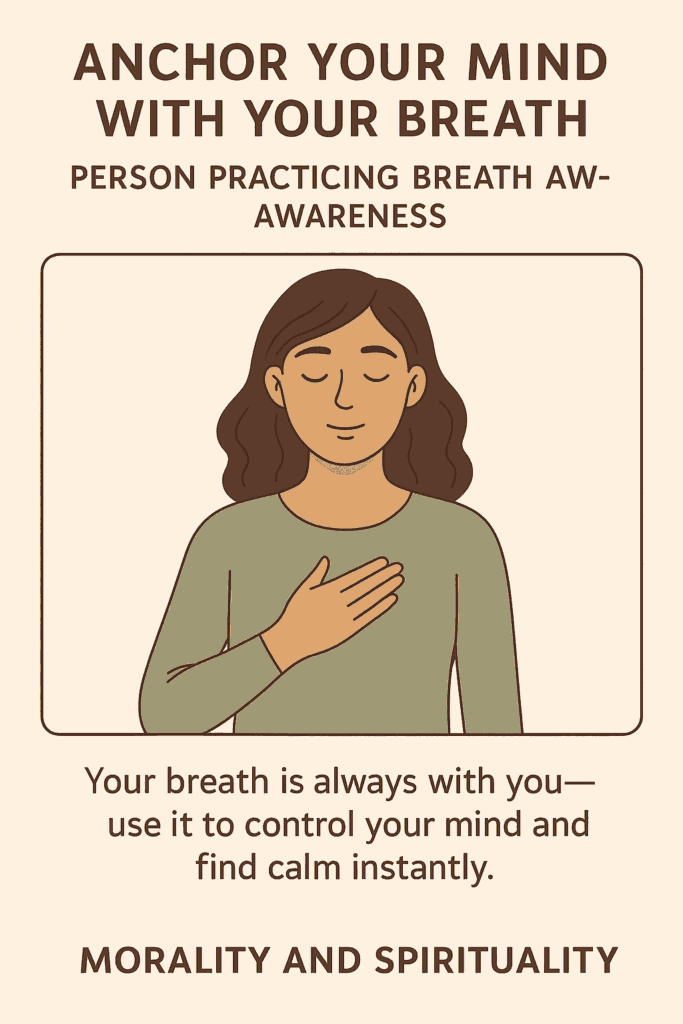
Anchor Your Mind with Your Breath
Once you can observe your thoughts, you need something to hold your attention, so it doesn’t get pulled back into the mental storm. Your breath is perfect for this.
Here’s the practice: After you notice your wandering thoughts, gently focus on the feeling of breathing. Notice the cool air coming in through your nose, your chest and belly expanding, the warm air going out. Don’t force your breathing or try to change it—just notice what’s happening naturally.
Your mind will wander. That’s normal. Every time you catch yourself thinking about something else, simply bring your attention back to your breath. No judgment needed.
As your breathing becomes slower and deeper, your mind and body settle down together. This is how you build a calm, steady mind. It’s not about having an empty head. It’s about having a clear, focused mind anchored in the present moment.
Feel Your Emotions Without Being Controlled by Them
When you can control your mind, you naturally get better at handling your emotions.
Real emotional mastery doesn’t mean never feeling angry or sad. It means you can feel these emotions fully without letting them take over and make you do things you’ll regret.
The secret is to catch emotions early. There’s always a brief moment between something triggering you and your full reaction. With practice, you can spot this moment.
You might feel a flash of heat (anger), a knot in your stomach (anxiety), or a heavy feeling (sadness). The moment you notice it, say silently to yourself: “This is anger” or “This is anxiety.” That’s all. By naming it, you create space between you and the emotion. You’re no longer being angry—you’re watching anger. This space lets you breathe and choose how to respond, rather than just reacting automatically.
Let Go of Anger Fast
Anger is the most destructive emotion, so it deserves special attention.
Anger always starts the same way: your mind insists something should not be happening. “This shouldn’t be so hard.” “They shouldn’t act this way.” But arguing with what’s already happening is like arguing with the weather—it doesn’t change anything, and it only makes you miserable.
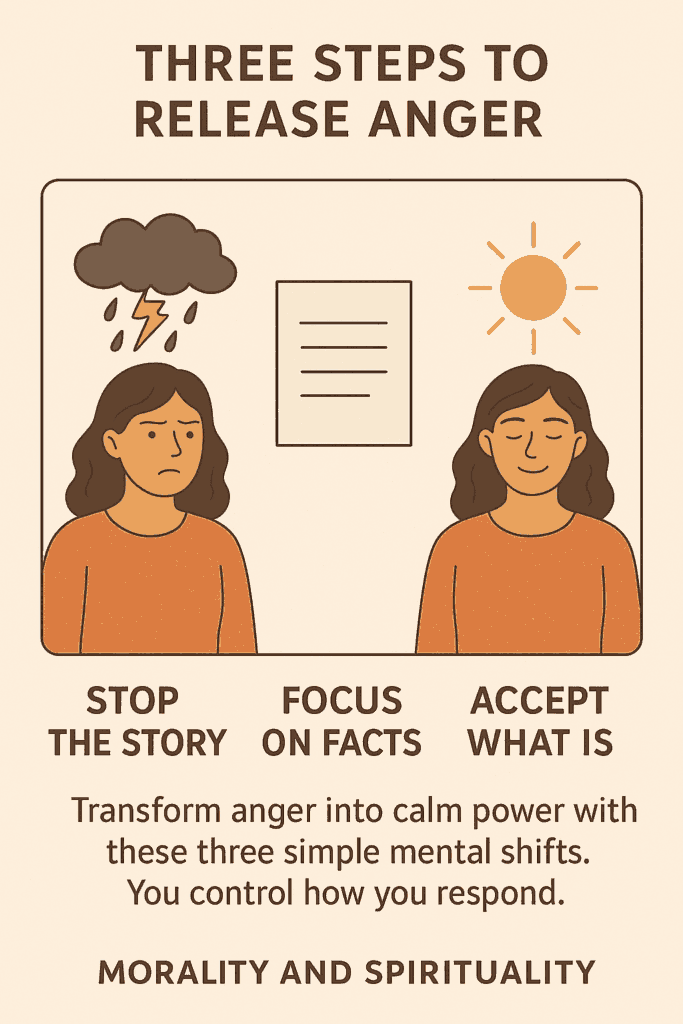
Here are three steps to let go of anger:
1. Stop the story. The moment you feel anger, stop replaying what happened and what the other person did wrong. This story is what fuels the anger.
2. Focus on the facts. Strip away your feelings and judgments. What actually happened? Just the facts, nothing more.
3. Accept what is. Right now, in this moment, the situation already happened. You can’t change the past. Resisting it only hurts you. When you accept reality, you can respond from a place of calm strength instead of exploding.
By practicing this, you realize that the situation is one thing, and your angry reaction is another. You have the power to choose a different response. This is what it means to control your mind and your emotions.
Live With a Clear, Calm Mind Every Day
The real goal isn’t to sit quietly in meditation all day. It’s to take this clarity and calm with you into your actual life.
When your mind is truly controlled, you work better, you relate to people better, and you handle challenges without falling apart. Success doesn’t puff you up, and failures don’t crush you. You can see clearly without all your emotions clouding your judgment.
This is what a truly settled mind feels like. And it’s something you can build, starting right now. Explore more from our article on mindfulness and memory connection.
Start Your Mental Mastery Today
You now have the tools. Here’s what to do:
Today: Take one minute and focus on your breath. Notice what your mind is doing without judging it.
This week: Practice the 30-second awareness check at least three times a day. Ask yourself what you’re thinking and feeling.
Going forward: When you feel strong emotions, use the naming technique. Say what you’re feeling out loud or silently and notice how it creates space for you to respond calmly.
These small, consistent practices are how you build real change. The path to controlling your mind isn’t complicated—it just takes commitment. Start today and experience the freedom that comes from being in charge of your own thoughts and emotions. You can learn more from our blog on What is Meditation and Why You Should Start for mental mastery guide.
Frequently Asked Questions on How to Control Your Mind
Q: How long does it take to control your mind?
A: Most people notice changes within 1-2 weeks of consistent practice. Some feel calmer within days. The key is doing these practices regularly, even for just a few minutes. Real transformation happens after a few months of commitment. Think of it like building muscle—the more you practice controlling your thoughts, the stronger you become.
Q: Is it possible to control your mind if you have anxiety?
A: Yes. In fact, learning to control your mind is especially helpful for anxiety. When you notice anxious thoughts and practice observing them instead of fighting them, the anxiety loses power over you. The breathing technique is particularly effective—it calms your nervous system and gives your anxious mind something focused to do. If your anxiety is severe, combine these techniques with professional support from a therapist or counselor.
Q: What’s the difference between controlling my mind and suppressing my thoughts?
A: Suppressing means pushing thoughts away and pretending they don’t exist—this actually makes them stronger. Controlling your mind means you notice your thoughts, you understand them, and you choose whether to follow them or let them pass. You’re not fighting them; you’re becoming the observer. This is why observing your thoughts without judgment works so much better than trying to force them away.
Q: Can I control my mind during stressful situations?
A: Yes, but it takes practice. The techniques in this guide work best when you practice them daily when life is calm. Then, when stress hits, your mind is trained to stay steady. Start small—use the breathing technique or the naming practice when you feel slightly stressed. As you get better, you’ll handle bigger stresses. Remember, controlling your mind is a skill, and all skills improve with practice.