
How to Remember Dreams: Science, Dream Recall Techniques & Dream Symbols Explained
Have you ever woken from a vivid dream only to watch it dissolve within seconds? Scientists estimate that approximately 50% of dream content is forgotten within five minutes of waking, while nearly 90–95% disappears within ten minutes. The reason lies in how the brain handles memory during sleep, not in any personal failure of attention.
During REM (Rapid Eye Movement) sleep — the stage most associated with vivid dreaming — the hippocampus, which plays a central role in memory encoding, operates differently than during waking hours. Norepinephrine, a neurochemical essential for memory formation, is suppressed during REM sleep, making dream memories fragile and biologically difficult to retain. Sleep quality, stress, and even hydration all influence how much you carry into waking awareness.
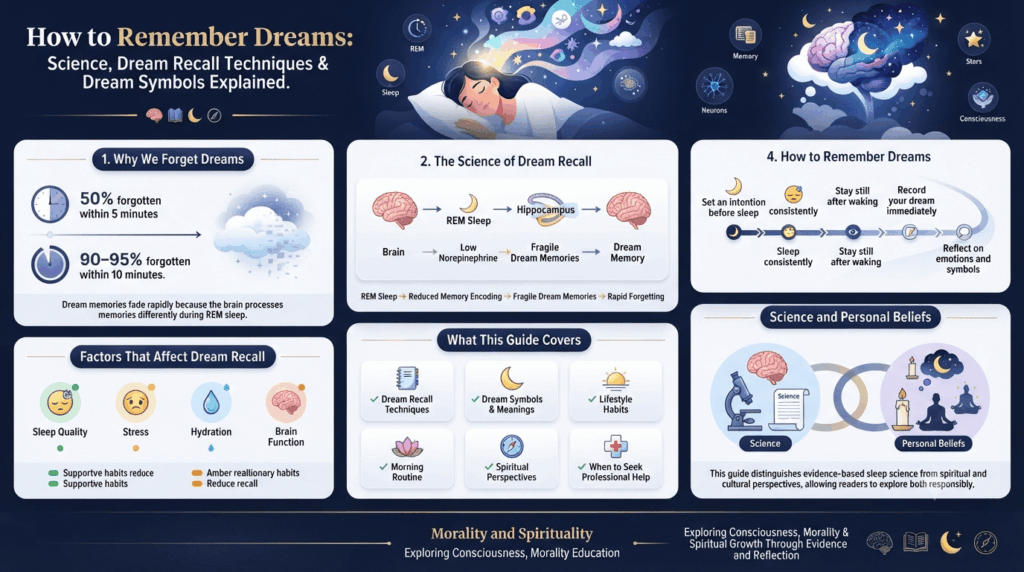
Learning how to remember dreams isn't simply a matter of trying harder. It involves understanding sleep science, building intentional daily habits, and strengthening your recall from the subconscious mind. Exploring how thought and consciousness influence perception and awareness can also provide valuable context for understanding why dreams are such a unique aspect of the human mind.
In this guide, you will find evidence-based dream recall techniques, an exploration of dream symbols and meanings, lifestyle habits that support better recall, morning routines, spiritual perspectives clearly identified as cultural traditions, and guidance on when to seek professional support. Science and personal belief are clearly distinguished throughout.
Why Do I Forget My Dreams So Quickly After Waking Up?
During REM sleep, the prefrontal cortex — responsible for logical thinking and long-term memory is relatively quiet. At the same time, norepinephrine drops to its lowest levels of the day. Together, these conditions create a biological environment where experiences feel vivid but resist consolidation into lasting memory.
Research indicates that people who wake naturally during or just after REM sleep recall more dreams than those interrupted by an alarm. REM cycles also grow progressively longer toward the early morning hours, meaning the period just before natural waking offers the richest opportunity for dream recall.

Additional factors compound the problem. Stress and anxiety fragment sleep architecture, reducing the depth and continuity of REM cycles.
Alcohol — even in moderate evening amounts — suppresses REM sleep significantly.
Sleep deprivation shortens REM cycles, reducing both the frequency of dreaming and the opportunity for recall. Understanding these mechanisms is the foundation of any practical approach to how to remember dreams more consistently.
Since understanding and knowledge are keys to personal power, dreams offer you invaluable insights. This connection between consciousness and different states of awareness reveals why dream work proves so transformative.
Best Dream Recall Techniques: Evidence-Based Approaches
When it comes to dream recall techniques, consistency and intentional practice matter most. The following approaches are grounded in sleep science and cognitive psychology.
Stay still upon waking. Physical movement signals the brain to transition fully into waking consciousness, displacing fragile dream content. Remaining still with eyes closed gives memories a brief window to surface before fading.
Keep your eyes closed. Visual input from the environment competes directly with fading dream imagery. Keeping eyes closed reduces this interference in the first moments of waking.
Write or record immediately. Keep a journal or voice recorder beside your bed. Consistently recording dreams—even fragments—trains the brain to treat dream retention as a priority. This reflective habit also strengthens mindfulness and memory, helping you become more aware of recurring dream patterns and improving recall over time. Most people notice measurable improvement within two to three weeks.
Set a pre-sleep intention. Prospective memory research demonstrates that giving yourself a clear mental instruction before sleep—such as repeating "I will remember my dream when I wake"—can meaningfully improve recall. This practice is closely related to developing greater mental focus and intentional awareness, skills explored in our guide on how to control your mind. Repeat this statement quietly as you drift off to sleep.
Maintain a consistent sleep schedule. A regular sleep-wake cycle stabilises REM timing, increasing the likelihood of waking naturally during or just after a dream.
Reduce alcohol and sleep interruptions. Alcohol suppresses REM sleep even in moderate amounts. A quiet, comfortable sleep environment that minimises fragmented waking protects unbroken REM cycles and supports how to improve dream recall naturally every morning.
Understanding Dream Symbols and Meanings
As your recall improves, interpreting what you remember becomes the next rewarding step. Dream symbols and meanings are partly universal and partly personal.
Water commonly represents emotion or the unconscious mind. Calm water often suggests inner peace; turbulent water may reflect unresolved feelings. Vehicles frequently reflect how you feel you are navigating life circumstances, with their condition and colour offering psychological clues.
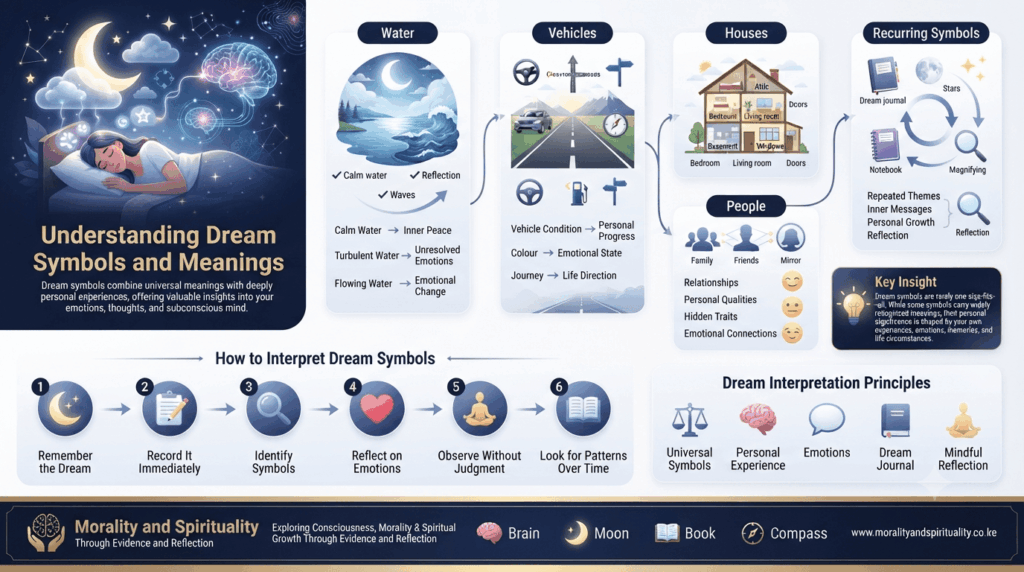
Houses and rooms tend to symbolise the self, with different areas reflecting different aspects of personality or relationships. People in dreams often represent qualities associated with those individuals — or qualities you recognise within yourself.
Rather than applying rigid interpretive rules, treat dream analysis as a reflective practice. Journaling your associations and revisiting entries over weeks frequently reveals patterns unique to your inner life. This process closely mirrors mindfulness practice — observing without judgement, noticing what surfaces. Recurring symbols deserve particular attention, as they often point to themes the subconscious consistently presents for reflection.
Lifestyle Habits That May Improve Dream Recall
Daily habits shape the biological conditions for dreaming and retention.
Hydration. Dehydration contributes to cognitive impairment and brain fog. Staying adequately hydrated — approximately 2–3 litres of water daily — supports normal brain function, which may indirectly benefit dream recall. Note that direct scientific evidence linking hydration to dream content specifically is limited; the benefit is more broadly cognitive.
Nutrition and sleep-supporting foods. Serotonin — a neurotransmitter influencing mood, appetite, and sleep — is the precursor to melatonin, the hormone regulating sleep-wake cycles. Foods that support serotonin and melatonin production include bananas, oats, brown rice, turkey, chicken, fish, pineapple, tomatoes, and nuts. Evidence regarding specific foods and dream vividness remains mixed; the more reliable benefit is to overall sleep quality.
Evening meals. Heavy meals close to bedtime increase digestive activity and can fragment sleep architecture. A lighter dinner eaten 2–3 hours before bed, with reduced caffeine in the afternoon and evening, meaningfully supports sleep quality and REM duration.
Sleep schedule. Because REM cycles grow longer toward morning, maintaining a consistent sleep schedule and allowing yourself to wake naturally — when possible — provides the best opportunity for dream recall.
Morning Habits That Preserve Dream Memory
The first few minutes after waking are decisive. These evidence-supported habits directly protect dream memory during that fragile window.
- Avoid your phone immediately. Incoming information — notifications, news, social media — rapidly displaces dream content. Allow yourself at least five minutes before engaging with any device.
- Stay still. Delay physical movement and allow images or feelings to surface before getting up.
- Start with emotions. If visual details are gone, begin with how the dream felt. Emotions are reliable threads that often pull associated images into conscious awareness.
- Replay in reverse. Working backwards from the last remembered fragment can help reconstruct earlier scenes that might otherwise remain inaccessible.
- Write or speak immediately. Whether in a dedicated dream journal or a voice memo, externalising dream content before engaging with your day is consistently the most reliable preservation method.
Spiritual and Cultural Perspectives on Dream Recall
Across many cultures and spiritual traditions, dreams are understood as meaningful experiences that may provide guidance, personal reflection, or connection to something greater. The following practices represent traditional beliefs and are not scientifically verified, but many individuals find them spiritually significant and personally meaningful.
Prayer and spiritual intention. Many traditions encourage prayer before sleep as a way of opening oneself to meaningful, protective, or instructive dreaming. This pairs naturally alongside evidence-based pre-sleep intention-setting. For readers who wish to deepen this reflective practice, developing a regular meditation practice can also encourage greater self-awareness, relaxation, and mindful preparation before sleep.
Sacred objects. In various African traditional healing practices, items of spiritual significance — beads given by a guide, herbs, or a rope — are placed near or within the sleeping space to maintain connection with ancestral wisdom. These are acts of cultural identity and spiritual commitment, not scientifically verified sleep aids.
Symbolic objects for protection. In some traditions, placing objects such as coins beneath the bed is believed to provide spiritual protection or promote undisturbed sleep. These practices are rooted in cultural belief rather than scientific evidence, but hold deep meaning for those who observe them.
Ancestral practices and attire. Traditional healers and spiritually called individuals in some African traditions wear or keep items of their calling — a white cloth, beads, or a ceremonial garment — near or on them during sleep as a way of remaining spiritually receptive. These are respected traditional practices.
Incense and ritual cleansing. Burning incense or performing cleansing rituals before sleep is a meaningful tradition across many spiritual paths. These practices create intentional, spiritually prepared environments that many find conducive to reflective sleep and dreaming.
For those whose lives include traditional or spiritual practice, integrating these meaningful rituals alongside evidence-based techniques may create a holistic personal approach. Whatever practices you choose, approaching them with respect, discernment, and spiritual ethics helps ensure they remain grounded in personal growth while recognising the distinction between cultural beliefs and scientific evidence.
When Should You Be Concerned About Forgetting Dreams?
Forgetting dreams is entirely normal. Most people forget the majority of their dreams, and not every night produces memorable recall. However, certain sleep-related experiences warrant professional attention:
- Frequent, distressing nightmares or night terrors that regularly disrupt sleep
- Sleep apnoea — characterised by interrupted breathing, excessive daytime fatigue, or waking gasping
- Narcolepsy or significant unexplained changes in sleep-wake patterns
- PTSD-related recurring dreams causing significant ongoing distress
If you experience these, consulting a healthcare provider or sleep specialist is recommended. The American Academy of Sleep Medicine and the National Sleep Foundation provide reliable, evidence-based resources on sleep disorders and when professional support is appropriate.
Frequently Asked Questions
Why do I forget my dreams so quickly after waking up?
Most dreams fade quickly because, during REM sleep, the brain suppresses norepinephrine, a neurotransmitter essential for memory formation. This makes dream memories fragile and easy to lose within minutes of waking. Staying still and using proven dream recall techniques—such as recording your dreams immediately—can significantly improve how well you remember them.
Does REM sleep affect dream recall?
Significantly. REM cycles, especially the longer ones occurring in the early morning hours, produce the most vivid and memorable dreams. Anything that shortens or disrupts REM — alcohol, stress, irregular schedules — reduces recall.
Can I control what I dream about?
Yes, through pre-sleep intention-setting and lucid dreaming techniques. State your desired dream topic three times before sleep, meditate on it, and instruct yourself to awaken after receiving the information. With practice, you can direct dream content and even become conscious within dreams to explore deliberately.
Does keeping a dream journal really work?
Yes. A dream journal is one of the most effective dream recall techniques because it trains your brain to prioritise remembering dreams. Recording dreams immediately after waking also helps identify recurring patterns and symbolic meanings, making dream interpretation more meaningful over time.
Can dehydration affect memory?
Dehydration impairs general cognitive function. While it does not directly cause dream loss, maintaining adequate hydration supports the brain function involved in memory processing.
Does stress affect dream recall?
Yes. Chronic stress can fragment sleep, reduce REM continuity, and make dream memories more difficult to retain. Managing stress through relaxation, healthy sleep habits, or a regular mindfulness practice may improve both sleep quality and dream recall.
Are spiritual dream practices scientifically proven?
Not currently. Spiritual and cultural dream practices are based on personal beliefs and long-standing traditions rather than scientific evidence. Many people find them personally meaningful, but they should be viewed as complementary to—not replacements for—evidence-based dream recall techniques.
Conclusion: Begin Your Journey to Remembering Dreams
Learning how to remember dreams begins with small, consistent habits. By applying evidence-based dream recall techniques—such as staying still upon waking, keeping a dream journal, setting a pre-sleep intention, and maintaining healthy sleep habits—you can significantly improve your ability to remember and understand your dreams. As your recall strengthens, exploring dream symbols and meanings can provide deeper personal insight, whether viewed through scientific, psychological, or cultural and spiritual perspectives.
The key is consistency. Start tonight by setting an intention before sleep, and tomorrow morning, take a few quiet moments to record everything you remember before reaching for your phone. Over time, these simple practices can transform forgotten dreams into meaningful experiences. If you found this guide helpful, continue your journey by exploring our articles on types of dreams and meanings and mindfulness and memory to deepen your understanding of dreams and consciousness