
Mindfulness Practice and the Joy of Present Moment Awareness
Your mind is rarely fully here. Right now, even as you read this sentence, part of your attention may already be drifting — toward an unfinished task, a conversation from earlier, or a low hum of worry you can’t quite name. Most people live this way: half present, half somewhere else, perpetually chasing the next thought.
Yet hidden inside ordinary moments is something genuinely worth noticing — a quiet, refined joy that most people never discover because their attention is always elsewhere. Mindfulness practice offers a path back to it. Grounded in meditation practice, it is the art of returning your attention to what is happening right now — without force, without judgment, and without needing anything to be different.
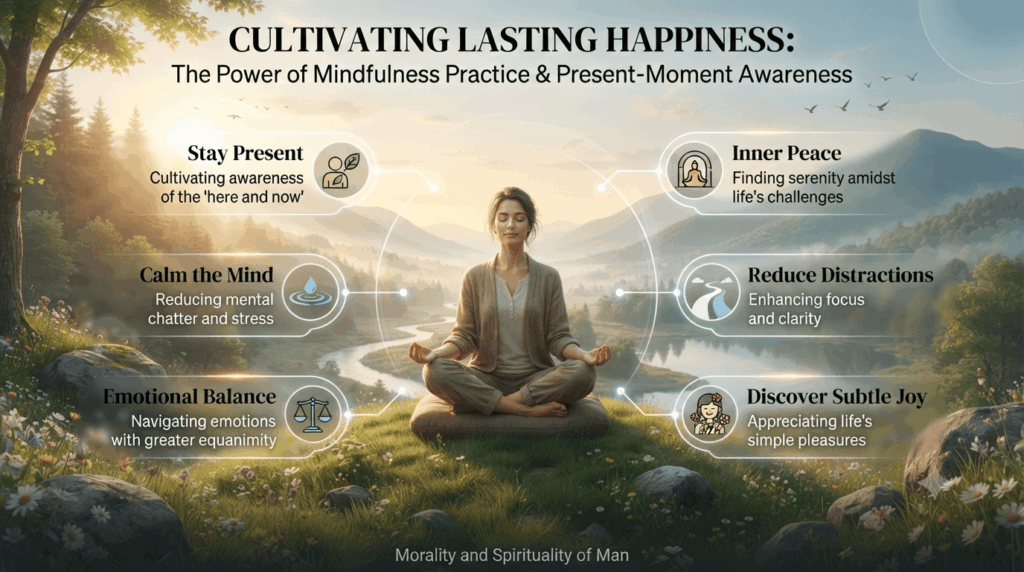
In this guide, you will discover why present moment awareness can feel so difficult to sustain, how a simple shift in attention transforms your relationship with daily life, and what it actually feels like to stay present in ways that are both natural and lasting. What you find here might surprise you.
Why Is It So Hard to Stay Present?
The mind has two habits that work against you. The first is a constant pull toward stimulation — thoughts, plans, memories, anything that feels more interesting than this ordinary moment. The second obstacle is excessive effort. When you try too hard to focus, mental tension replaces the very openness you need.
Think of tuning a musical instrument. Strings pulled too tight snap or distort. Strings left too slack produce nothing useful. The right tension — balanced and responsive — allows the instrument to sing. Learning to control your mind follows the same principle. Awareness needs a middle ground: alert but relaxed, focused but open.
Without mindfulness practice, these habits run largely unchecked. The mind wanders because wandering has always gone unnoticed. When you find genuine balance, however, something natural arises — a subtle sense of ease, of being quietly at home in the present. The difficulty isn’t something wrong with you. It’s simply an untrained habit, and practice can gently change it.
How Does Mindfulness Practice Help You Stay Present?
As the article from Harvard Health outlines, mindfulness practice works by giving wandering attention something steady to return to — the breath, body sensations, or sounds around you. Rather than fighting distraction, you simply notice it and come back. Over time, this gentle returning trains focused attention and builds mental clarity.
The real guide in this process is feeling. When your mind finds genuine balance — neither too tight nor too slack — a quiet contentment arises on its own. This is what makes present moment awareness more than a technique. It becomes immediate feedback. When subtle joy appears, your attention has settled. When it disappears, tension or distraction has crept back in.
This self-correcting quality is what makes mindfulness sustainable over time. You are not forcing anything. You are learning to recognise what balance feels like and to return to it whenever you have drifted away. Each small return strengthens the habit until awareness of thoughts becomes second nature rather than an act of will.
What Is Contemplation of Feeling Meditation?
Every experience carries an underlying tone — a basic quality of pleasantness, unpleasantness, or neutrality. Most people move through life without noticing it. Contemplation of feeling meditation is the practice of learning to observe this tone clearly, helping you control your emotions before they sweep you away.
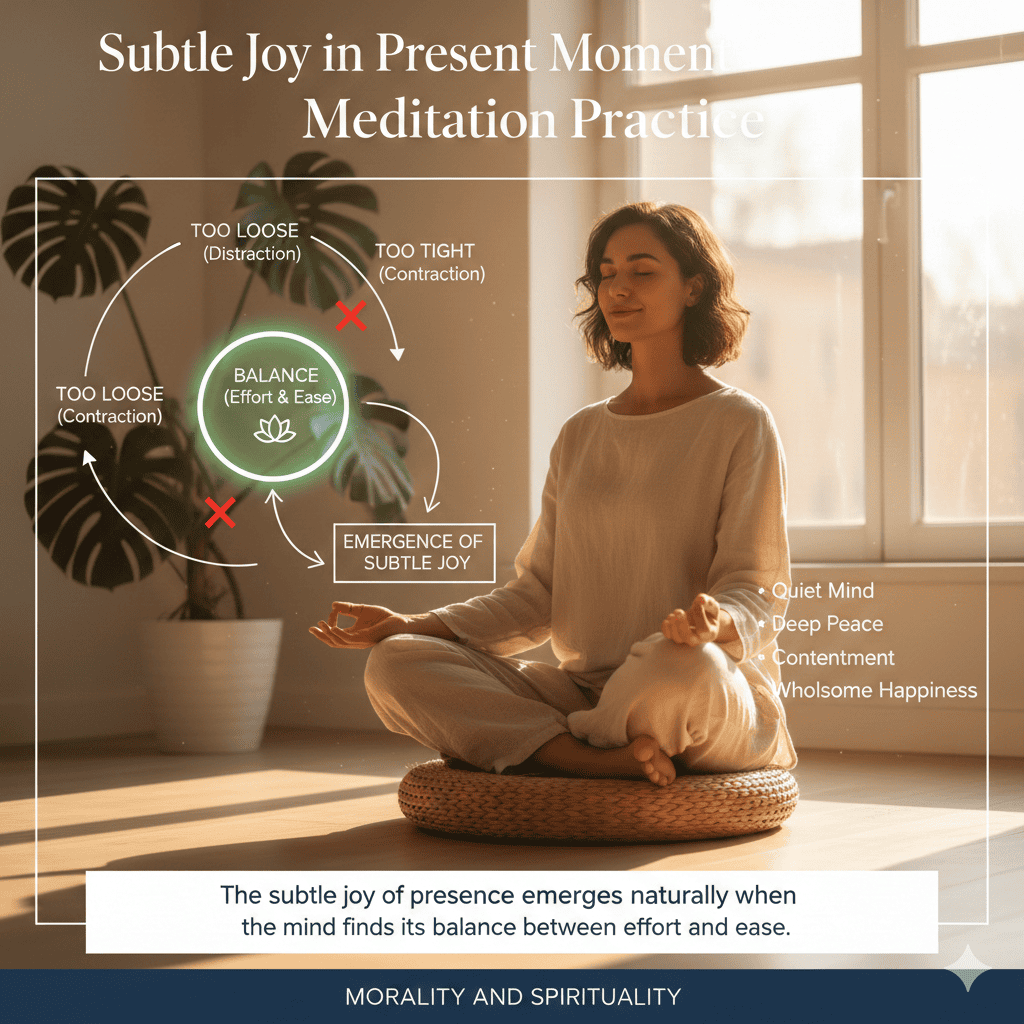
What makes this practice illuminating is a striking contrast. Sitting still for extended periods often creates physical discomfort — aches, stiffness, restlessness. Yet when the mind grows still, something quite different happens. A refined, pleasant feeling emerges from that inner quietude.
The body and mind do not experience stillness in the same way. That difference is precisely what the practice teaches you to explore. As you develop emotional awareness through consistent contemplation, you gain a growing ability to observe mental states without immediately reacting to them — a shift that brings lasting benefit into every dimension of daily life.
How Does Subtle Joy Arise During Mindful Awareness?
The joy that emerges during meditation is not manufactured. It arises when the right conditions align: stable mindfulness, a relaxed but alert mind, and attention resting fully in the present moment. Understanding the mind-body connection helps explain why — as physical stillness deepens, inner quietude naturally follows, and with it, a gentle sense of well-being.
This joy is subtle. It will not announce itself dramatically. It feels more like ease or quiet satisfaction than excitement. Once you recognise it, present moment awareness begins to carry a reward of its own. The mind, which previously wandered in search of something more interesting, discovers something genuinely satisfying right here.
This is also where inner peace through meditation begins to feel less like a concept and more like a direct experience. The practice stops feeling like effort and starts feeling like return — a homecoming the mind has been seeking all along without knowing where to look.
How Can You Bring Daily Mindfulness Into Ordinary Life?
Daily mindfulness does not require a cushion or a quiet room. The same quality of attention you develop during formal practice can accompany you through the most ordinary moments.
Washing dishes — feel the warmth of the water, notice the quiet rhythm of your hands moving through familiar motions. Walking to your car — bring your attention to your feet meeting the ground and the temperature of the air around you. Waiting in line — rather than reaching for your phone, return to your breathing, feel where your feet make contact with the floor, and soften any tension you find in your shoulders.
Each time you choose presence over distraction, you learn how to stay present in a way that compounds quietly over time. Learning to release negative energy often begins this simply — not through effort, but through returning attention to what is already here. The situation does not change. Your relationship to it does.
Why Does Mindfulness Practice Lead to Lasting Inner Peace?
Lasting contentment does not begin outside you. Sensory pleasures are real, but they depend on conditions that constantly shift. Good food ends. Comfort fades. Chasing happiness through external circumstances is an endless cycle of seeking and disappointment.
Meditation for inner peace offers a different approach. Rather than seeking stimulation elsewhere, you cultivate a quiet happiness that arises from within — from a mind at rest in wholesome awareness. Understanding the power of thought reveals just how profoundly the quality of inner life shapes your experience of everything else.
Both desire and anger arise when the mind chases pleasant experiences or resists unpleasant ones. Consistent practice interrupts this cycle by offering something better: presence itself as a source of genuine satisfaction. Discovering your true self through this work means less dependence on external conditions and a growing sense of sufficiency in what is already here.
Inner peace through meditation is not a distant reward. With steady practice, it becomes a quiet, lived reality.
Practical Tips to Stay Present in Meditation Every Day
Mindfulness practice does not demand perfection or hours of dedicated silence. These simple adjustments make a genuine difference and the infographic summarises the key points:
Start small. Five to ten minutes daily builds real momentum. Consistency matters far more than duration.
Find your balance point. If awareness feels forced or strained, soften slightly. If attention keeps drifting, gently gather it back. Adjust until that quiet contentment appears as your guide.
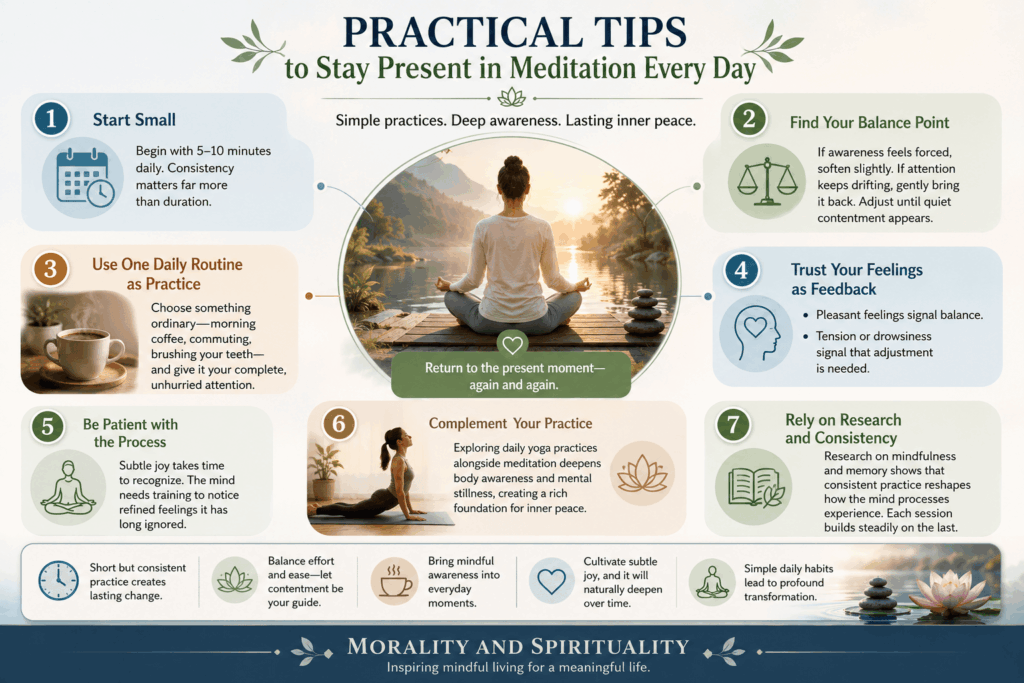
Use one daily routine as practice. Choose something ordinary — your morning coffee, your commute, brushing your teeth — and give it your complete, unhurried attention each day.
Trust your feelings as feedback. Pleasant feelings signal balance. Tension or drowsiness signal that adjustment is needed.
Be patient with the process. Subtle joy takes time to recognise. The mind needs training to notice refined feelings it has long ignored.
Complement your practice. Exploring daily yoga practices alongside meditation deepens both body awareness and mental stillness, providing a rich foundation for inner peace through meditation.
Research on mindfulness and memory continues to confirm what practitioners have long understood: consistent practice reshapes how the mind processes experience. Each session builds steadily on the last.
Conclusion
The quiet joy you have been reading about is not hidden in extraordinary circumstances. It exists inside ordinary moments, waiting for your attention to arrive. Mindfulness practice is simply the decision to show up — again and again — to what is actually here.
What changes with consistent practice is not the world around you. It is your relationship to it. Distractions lose their grip. Emotions become easier to observe without being controlled by them. A calmer, more self-aware mind develops — not as a reward for great effort, but as a natural consequence of returning to now, day after day.
Start with something small. Take one fully conscious breath the next time you pause between tasks. Feel it completely from beginning to end. That is already the practice, and it is already enough.
As your awareness deepens, you may find yourself drawn toward broader questions about consciousness, meaning, and transformation. Exploring the path of spiritual awakening is a natural and rewarding continuation of that journey.
The present moment has always been here. It only ever asks for your attention.
Frequently Asked Questions
What is mindfulness practice?
Mindfulness practice is the intentional act of bringing your attention to the present moment without judgment. It involves noticing thoughts, feelings, and sensations as they arise without being swept away by them. Over time, it develops self-awareness, emotional balance, and a quieter, more stable mind that responds to life rather than simply reacting to it.
Why is it so difficult to stay present?
Staying present is difficult because the mind naturally gravitates toward stimulation and novelty. It also becomes harder when you try too forcefully — creating mental tension that blocks the very calm you are seeking. The practice is not about forcing stillness. It is about finding the relaxed, balanced attention where awareness settles naturally and stays.
Can I practice mindfulness without formal seated meditation?
Yes. Any moment of full, unhurried attention counts as mindfulness. Washing dishes, walking, eating, or simply breathing consciously are all valid practices. Formal seated meditation deepens and accelerates the skill, but daily life offers countless opportunities to apply it. Consistency across both approaches strengthens the practice most effectively.
How long does it take to notice the benefits of mindfulness?
Many people notice small shifts — greater calm, slightly more space between thoughts and reactions — within the first few weeks of consistent practice. Deeper benefits such as emotional regulation and sustained inner calm develop gradually over months. The key is regularity rather than duration: five minutes daily consistently outperforms one long session each week.
What is present moment awareness and why does it matter?
Present moment awareness is the conscious recognition of what is happening right now — in your body, your surroundings, and your mind. It matters because most mental suffering arises from dwelling in the past or anticipating the future. When attention rests in the present, a natural quietude emerges that makes daily life feel less overwhelming and considerably more manageable
Pingback: Attaining Psychic Health: A Complete Guide for Mediums and Psychics