
Hatha Yoga Cleansing Explained: 6 Yogic Purification Practices, Neti Guide & Energy Awakening Benefits
Do you wake up feeling foggy, heavy, or disconnected — even after a full night’s sleep? You’re not alone. Most people carry invisible layers of physical and energetic buildup that no amount of coffee or scrolling can clear. The ancient science of hatha yoga cleansing was designed precisely for this: to strip away what blocks you and restore razor-sharp clarity from the inside out.
Hatha yoga cleansing — rooted in the traditional system of ṣat karma (the six purifying actions) — is one of the most underutilized yet powerful branches of yogic purification practices.
In this guide, you’ll discover how each technique works, how to perform neti step by step, and why these practices are directly linked to energy awakening. Whether you’re a beginner or a seasoned practitioner, this is your roadmap to a purified body and a more luminous mind.
What Is Hatha Yoga Cleansing?
Hatha yoga cleansing refers to a set of classical purification methods described in ancient Sanskrit texts on Hatha Yoga. These are not optional warm-ups — they are foundational practices for anyone serious about inner development.
At the core of this system is ṣat karma, meaning “six actions.” These yogic purification practices work on multiple levels simultaneously: cleansing the physical body, purifying the subtle energy channels (nadis), and activating the body’s dormant centers of awareness. Together, they prepare the practitioner for deeper meditation and genuine energetic transformation.
The 6 Yogic Purification Practices (Ṣat Karma)
Each of the six techniques targets a specific system of the body and subtle energy field. Here’s a breakdown:
1. Neti (Nasal Cleansing)
A method for purifying the nasal passages and sinus cavities — and, as we’ll explore, a direct gateway to third eye awakening.
2. Dhauti (Stomach Cleansing)
Focused on purifying the upper digestive tract, traditionally believed to cleanse the “earth” element throughout the body.
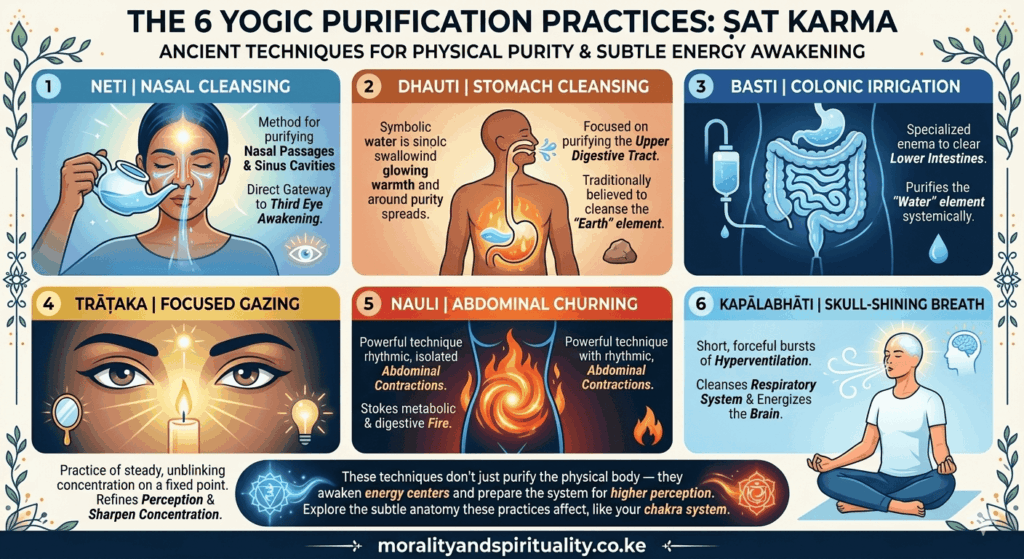
3. Basti (Colonic Irrigation)
A specialized enema technique used to clear the lower intestines and purify the “water” element systemically.
4. Trāṭaka (Focused Gazing)
The practice of steady, unblinking concentration on a fixed point — typically a candle flame or small object — to refine perception and sharpen concentration. If you’d like to explore this practice in depth, deepen your focus with mirror gazing meditation.
5. Nauli (Abdominal Churning)
A powerful technique using rhythmic, isolated contractions of the abdominal muscles to generate a rotating motion — stoking the body’s metabolic and digestive fire.
6. Kapālabhāti (Skull-Shining Breath)
Short, forceful bursts of hyperventilation that cleanse the respiratory system and energize the brain.
These six techniques don’t just purify the physical body — they awaken energy centers and prepare the entire system for higher perception. To understand how your chakra system works within this context, it’s worth exploring the subtle anatomy these practices directly affect.
Neti — The Most Powerful Hatha Yoga Cleansing Technique
Of all six practices, neti holds a special place in hatha yoga cleansing. Why? Because it has a direct, measurable effect on the awakening of the third eye — the seat of intuition and inner vision.
Benefits of Neti
- Clears sinus congestion and purifies the nasal passages
- Generates immediate inner clarity and a sharp feeling of alertness
- Purifies all energy channels in the neck and head, supporting healing of disorders in these areas
- Produces an acute sense of awareness and energetic aliveness
- Builds resilience against seasonal colds and infections
Neti for Third Eye Awakening
Neti for third eye awakening is not merely a metaphor. The nasal passages are directly connected to the frontal chakra (ajna), and regular neti practice is said to strengthen the third eye in a conspicuous, noticeable way — stimulating clairvoyant perception over time. For a deeper understanding of this energetic process, explore full third eye awakening techniques.
How to Perform Neti (Step-by-Step Guide)
Learning how to perform neti doesn’t require a traditional lota (long-beaked pot). The method below is more efficient and accessible:
What you need: A wide, shallow bowl or mug, clean purified water, rock salt or sea salt (do not use fine table salt — it irritates the nasal passages).
Steps:
- Prepare warm salt water — Fill the bowl with lukewarm water (roughly body temperature). Dissolve half a teaspoon of rock salt or sea salt.
- Position your face — Lower your nose into the water, keeping a relaxed posture.
- Draw water through the nostrils — Gently “drink” the water through the nose, letting it flow straight into the mouth.
- Expel through the mouth — Allow the water to naturally exit through the mouth. The whole process should feel refreshing, not uncomfortable.
- Repeat on the other side — Tilt the head slightly to ensure both nostrils are cleared.
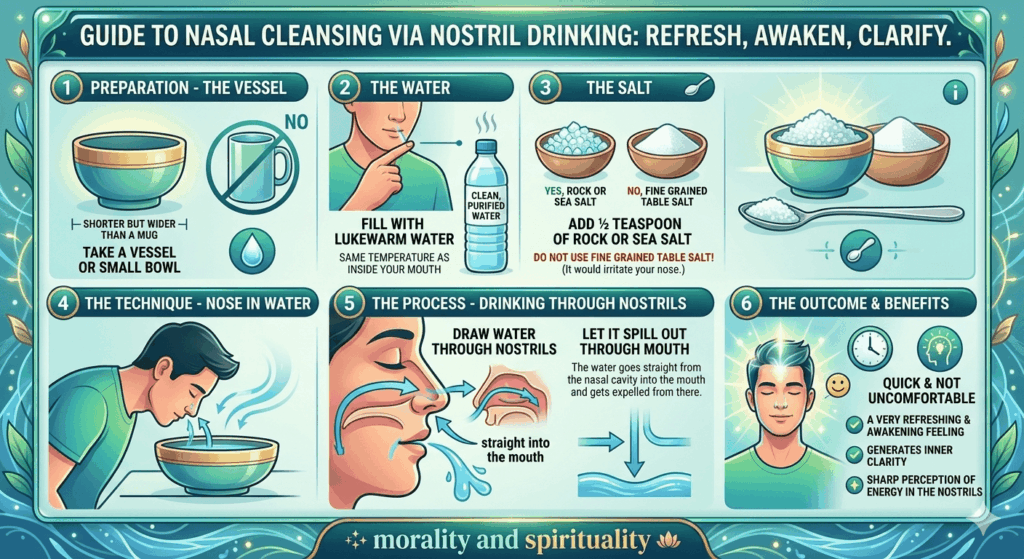
Once you know how to perform neti correctly, the entire process — including drying — takes just two to three minutes. To amplify the benefits, build a consistent meditation practice immediately after your morning neti session. You can also improve your breathing techniques to complement the nasal purification process.
Advanced Neti Tips Most Beginners Miss
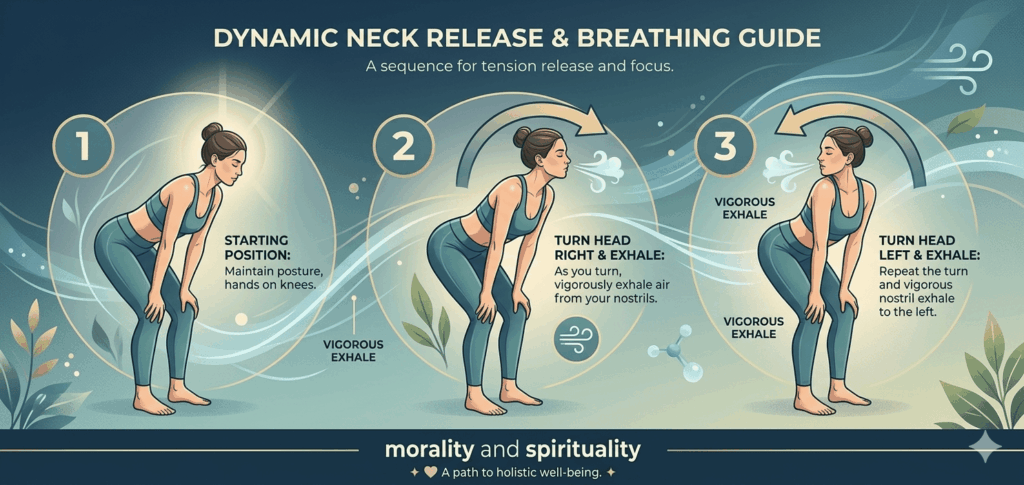
The drying technique is everything. Most guides simply say “blow your nose” — this is a mistake. Use this method instead:
- Stand with legs apart and slightly bent, hands resting on your knees
- Without moving your torso, throw your head sharply upward while forcefully exhaling through the nose
- Then project your head downward while blowing out again
- Alternate up-down for about 30 seconds, then repeat turning left and right
- No need to blow your nose before or after — this technique expels far more residual water
Best time: Morning, before eating, and before meditation.
Practice cycle: Daily for one to two years, then pause for a few years before resuming.
First attempts: Expect mild discomfort initially. Push through — most practitioners come to genuinely enjoy neti and miss it when they skip it.
The Hidden Link Between Cleansing and Energy Awakening
Hatha yoga cleansing doesn’t just purify tissue — it opens channels. The nadis (subtle energy pathways) run throughout the body, and blockages in these channels are the root cause of mental fog, emotional heaviness, and spiritual stagnation. Every cleansing technique in the ṣat karma system works to dissolve these blockages, making the body a cleaner vehicle for awareness. As clarity deepens, it becomes easier to develop control over your thoughts and mental patterns, especially when you learn how to control your mind effectively.
This is why practitioners who commit to yogic purification practices often report heightened sensitivity to subtle energy, clearer intuitive signals, and a deepening of meditative states. To understand the energetic dimension of this work, learn how vibration influences your energy and understand the human aura as a field that responds to purification practices.
Complementary Practices to Amplify Your Results
Hatha yoga cleansing works best when supported by a broader lifestyle of energetic hygiene. Consider adding:
- Fasting — Even two to three days on fresh juices can create remarkable energetic openings, especially when perception feels completely blocked. Improve your psychic health and awareness with targeted practices.
- Sexual energy management — Traditional Taoist and yogic systems both emphasize proper management of sexual energy as essential for subtle body development. Understand human energy and magnetism to work with this force intelligently.
- Energy-aware eating — Eating organic fruits one day per week is a gentle yet effective way to support the purification process between more intensive fasting periods.
FAQs
What is Hatha yoga cleansing?
Hatha yoga cleansing is a system of six traditional purification techniques (ṣat karma) that cleanse the physical body, purify energy channels, and awaken dormant centers of perception. It forms the preparatory foundation for advanced yoga and meditation practice.
How to perform neti safely?
Use body-temperature water — not too hot, not cold
Always use rock salt or sea salt, never fine table salt
Use the head-tossing drying technique after, not just nose-blowing
Perform on an empty stomach, ideally before morning meditation
Avoid if you have active ear infections or nasal injuries
Can neti awaken the third eye?
Yes — neti for third eye awakening is a well-documented effect in traditional Hatha Yoga texts. The nasal passages connect directly to the frontal (ajna) chakra. Regular practice is said to strengthen clairvoyant perception and sharpen inner awareness noticeably over time.
Start Your Cleansing Journey Today
Ready to unlock deeper clarity, sharper energy, and genuine inner awakening?
The practices above are simple enough to begin tomorrow morning — and profound enough to transform your perception over months and years. Start small: commit to neti every morning for 30 days and observe what shifts.
Deepen the journey by building a meditation practice to pair with your cleansing routine: What Is Meditation — Complete Guide
Every purified channel is one less obstacle between you and the clarity you’ve been seeking.